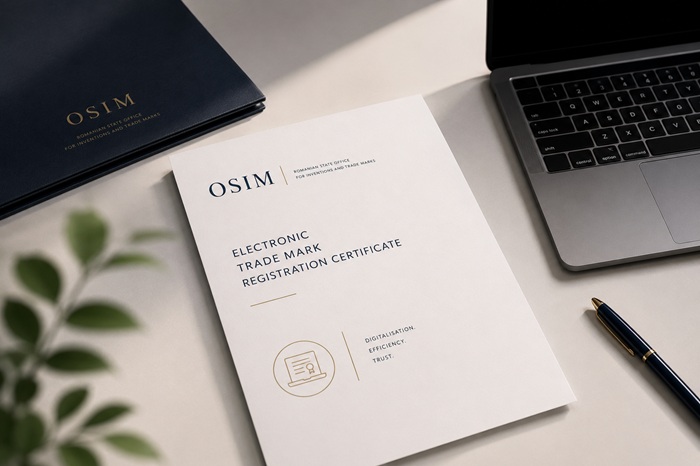
Romania Implements Electronic Trade Mark Registration Certificates
Romania has taken a significant step towards the digitalisation of intellectual property administration through the implementation of electronically issued trade mark registration certificates by the Romanian State Office for Inventions and Trade Marks (OSIM). The measure reflects an increasingly harmonised European approach to the modernisation of administrative procedures relating to the acquisition and management of intellectual property rights.
The transition from physically issued certificates to electronic documentation is expected to streamline administrative practice, facilitate more efficient communication between the authority and rights holders, and reduce procedural delays associated with the issuance and transmission of hard-copy registration documents.
OSIM now issues trade mark registration certificates in electronic format, authenticated through qualified electronic signature mechanisms and digital verification features intended to guarantee the integrity and authenticity of the document.
Administrative documents issued in electronic form and authenticated in accordance with the applicable electronic signature and trust services framework are capable of producing legal effects under both Romanian law and the European regulatory regime established by Regulation (EU) No. 910/2014 (the eIDAS Regulation).
The adoption of electronic certification mechanisms places Romania within the broader European trend towards fully digital intellectual property administration and aligns domestic practice with procedures already implemented by several European intellectual property offices.
Legal and Practical Implications for Trade Mark Holders
The introduction of electronic trade mark certificates carries material implications for trade mark proprietors, legal practitioners, in-house counsel and entities managing international intellectual property portfolios.
Electronically issued certificates are capable of serving the same evidential and administrative functions traditionally fulfilled by paper certificates. In practice, such documents may be relied upon in transactional matters involving the transfer, licensing or securitisation of trade mark rights, as well as in enforcement proceedings, customs applications, due diligence exercises and evidentiary submissions before judicial and administrative authorities.
The availability of registration certificates in digital form is particularly relevant in the context of cross-border commercial activity, where rapid access to documentary evidence of ownership frequently assumes considerable importance. For foreign applicants and multinational corporations maintaining Romanian trade mark portfolios, the elimination of physical issuance formalities may substantially reduce administrative inefficiencies and document transmission delays.

The Digitalisation of Romanian Intellectual Property Administration
The implementation of electronic trade mark certificates forms part of a broader institutional process directed towards the modernisation of intellectual property administration in Romania. Across the European Union, intellectual property offices have increasingly adopted digital filing systems, electronic communication procedures and online portfolio management infrastructure designed to improve administrative efficiency and procedural accessibility.
Romania’s transition towards electronic certification reflects a wider regulatory and administrative objective aimed at reducing bureaucratic burdens, improving procedural transparency and facilitating the efficient management of intellectual property rights in a digitally integrated commercial environment.
The development also carries practical significance from an environmental and operational standpoint, given the reduction in paper-based administrative processes and the diminished reliance upon physical document transmission.
Implications for Trade Mark Enforcement and Commercial Transactions
From an enforcement perspective, immediate electronic access to registration certificates may facilitate the commencement of preliminary enforcement measures, including cease-and-desist correspondence, border enforcement applications and preparatory evidentiary procedures in infringement litigation.
The electronic format may likewise prove advantageous in transactional contexts involving mergers and acquisitions, corporate restructurings, financing arrangements, franchise operations and intellectual property audits, all of which frequently require prompt documentary verification of trade mark ownership and registration status.
The procedural efficiency associated with electronic certification is likely to be particularly valuable for businesses operating substantial trade mark portfolios across multiple jurisdictions, where the timely availability of registration documentation forms an essential component of internal rights management and external legal compliance.
Procedural Considerations for Applicants and Rights Holders
Applicants seeking national trade mark protection in Romania should ensure that all electronic correspondence details and representation information submitted during prosecution proceedings remain accurate and up to date in order to avoid complications relating to electronic communication and document delivery.
Although electronically issued certificates possess legal validity within the applicable European regulatory framework, parties intending to rely upon such documents before foreign authorities or institutions may nevertheless be required to consider additional formalities depending upon the requirements of the relevant jurisdiction, including certified translations, apostille formalities or supplementary authentication procedures.
Trade mark proprietors would also be well advised to implement appropriate digital archiving and document management practices to ensure the secure preservation and accessibility of electronically issued intellectual property documentation.
Electronic Certification and the Future of Trade Mark Administration in Romania
The introduction of electronic trade mark registration certificates constitutes an important development within the Romanian intellectual property landscape and represents a further step towards the establishment of fully digital administrative procedures in the field of industrial property protection.
As commercial activity and intellectual property management continue to evolve within an increasingly digital environment, electronically issued registration documentation is likely to become an established feature of administrative practice throughout Europe.
Beyond its administrative significance, the introduction of electronic trade mark certificates reflects a wider shift towards the digital management of intellectual property rights in Romania. The ability to obtain registration documentation electronically is likely to facilitate day-to-day portfolio administration, particularly for companies managing extensive trade mark filings across multiple jurisdictions and requiring prompt access to official records for commercial, regulatory or enforcement purposes.
Leave us a message: